Training and Early Career
The Royal Academy in Antwerp

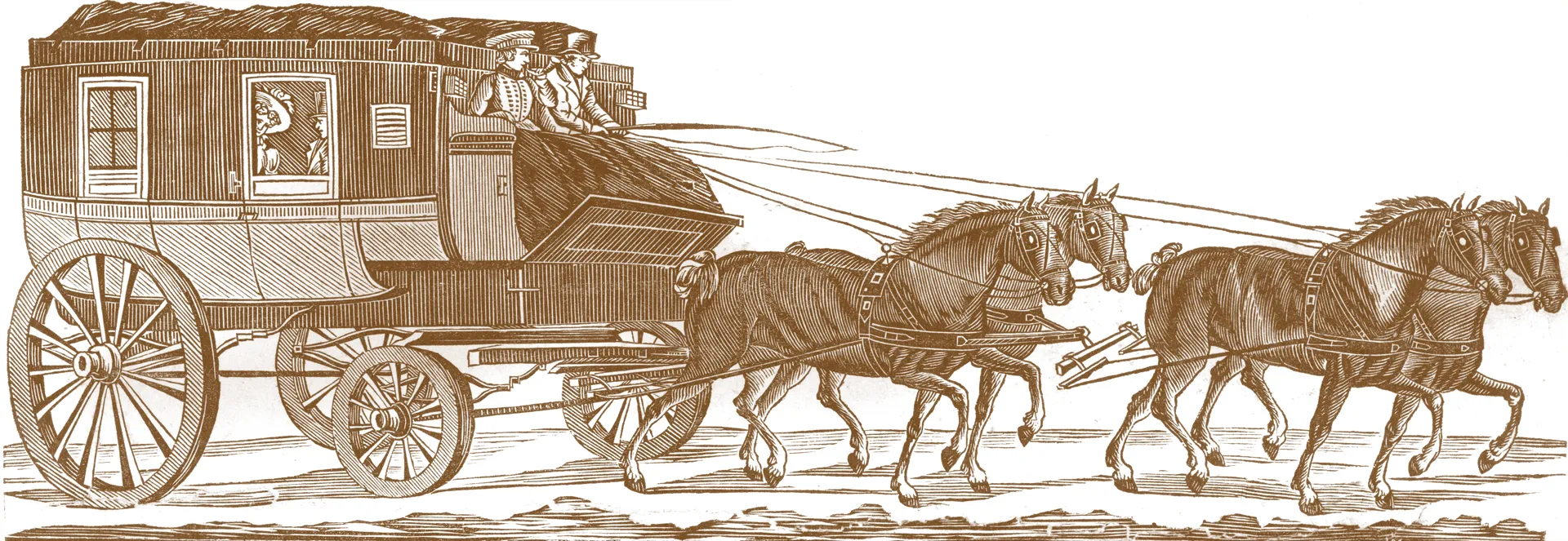
At the age of seventeen, Louis Brüls left Übach and enrolled at the Royal Academy of Fine Arts in Antwerp in 1820. In a pre-railway world, the journey of roughly 120–140 km would likely have taken three to four days by carriage along regional road networks, considerably longer than the shorter distances he had known as a boarding student travelling between Drinhausen and Maastricht.
The Antwerp he entered was a city in transition. Since 1815 it had formed part of the United Kingdom of the Netherlands, and its port on the Scheldt was undergoing a cautious revival after the disruptions of the Napoleonic period. For a young student arriving from the Limburg borderlands, it offered a markedly larger urban, commercial, and artistic world.
He was not alone in the city. His elder brother Joseph Ignatius Brüls (1795–1852) had also established himself in Antwerp during this period, and by 1825 Joseph was documented as a wijnsteenraffinadeur (wine tartar refiner) with a residence at Oever 2366 and business premises at Rijnplein 109, providing Louis with a family anchor.

The Royal Academy grew into an internationally renowned institution for fine arts, architecture and design. From the nineteenth century onwards, it attracted young artists from abroad. Irish, German, Dutch and Polish artists seeking rigorous classical training made their way to Antwerp.
By Louis Brüls’s time, the Academy had been based in the former Minderbroedersklooster in the Mutsaardstraat for less than a decade, after its transfer there in 1810–1811 under Napoleon. In 1817, under King William I, it received the title “Royal” and was authorised to organise a Grand Prix, later known as the Prix de Rome.
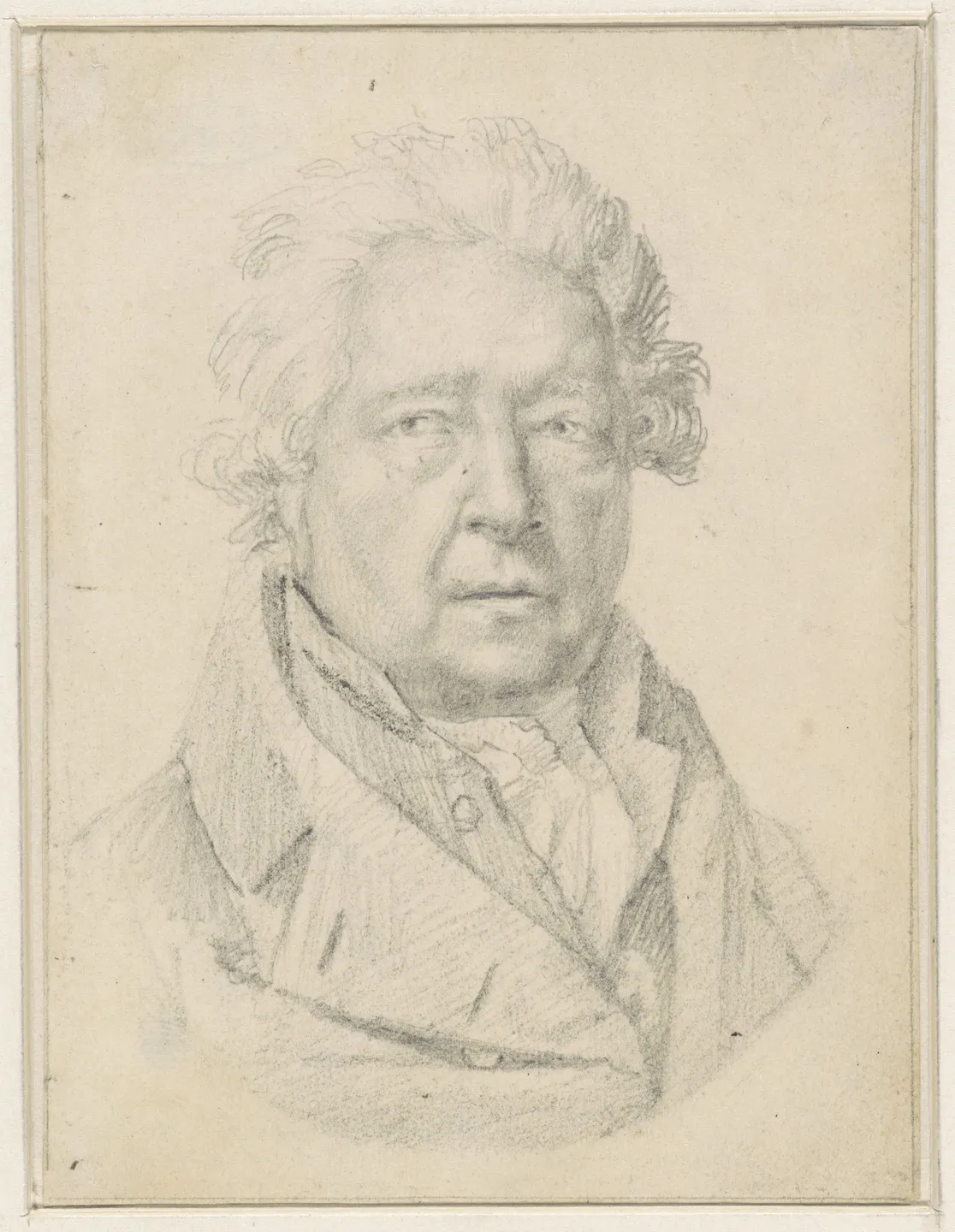
Louis's principal teacher was Willem Jacob Herreyns (1743–1827), widely regarded as the last follower of Rubens, who had served as teacher-director of the Academy since 1800 and had personally rescued 328 paintings from French Revolutionary destruction in 1797.
Herreyns was as much an institution builder as a teacher: he had obtained Napoleon's authorisation in 1810 to establish a museum in the former Franciscan monastery in Antwerp, the direct institutional ancestor of the KMSKA (Royal Museum of Fine Arts Antwerp).
Herreyns's style was rooted in the Flemish Baroque, with rich, warm tonalities and precise draughtsmanship, and he consciously carried the Rubens tradition forward against the Neoclassical influence of Jacques-Louis David.

Louis also studied alongside Gustaaf Wappers (1803–1874), who trained under both Herreyns and his successor, Mathieu-Ignace Van Brée (1773–1839). Wappers would become the leading figure of Belgian Romanticism and Principal Painter to King Leopold I.
His own later students would include Ford Madox Brown and Lawrence Alma-Tadema, extending the pedagogical lineage of the Antwerp Academy deep into British Victorian painting.
Another fellow student, Antoine Wiertz (1806–1865), had enrolled at the Academy in 1820 at the age of fourteen, three years younger than Louis, and would later win the inaugural Belgian Prix de Rome in 1832.
By 1823, Brüls was recorded as "Dutch" in some later art references, including the RKD (Netherlands Institute for Art History), reflecting his residence in Antwerp, then a city of the United Kingdom of the Netherlands.
A later Thieme-Becker entry also described this shift, noting that he was first naturalised in Holland and later in Belgium.

One of Brüls's earliest known commissions was a portrait painted in 1826 of Marie-Agnès Hoeberechts.
The 2020 Legia-Auction record described Hoeberechts as the wife of a member of the Biolley family; however, there is no evidence to support this. Genealogical records indicate that she was married to Pierre Kersten (1789–1865), a former professor of Greek at Brüls's alma mater in Maastricht, who had become a publicist and newspaper owner in Liège. Kersten would later publish the Journal historique et littéraire, the same periodical that carried two articles about Brüls's career in its 1839 and 1842 volumes.
In 1830, Brüls exhibited copies at Liège, which a contemporary reviewer later described as mediocre. This is the earliest exhibition activity recorded for him in any source.
The Nécrologe Liégeois, in its obituary of the painter Jean-François Corbusier (1810–1851), records that Brüls served as both friend and master ("ami et maître") to the younger artist in Liège, and that Corbusier obtained a scholarship from the Fondation Darchis to follow Brüls to Rome. This mentoring role shows that Brüls's influence extended beyond his own studio practice and into the training of a next generation of Liège painters.
Revolution and Transition
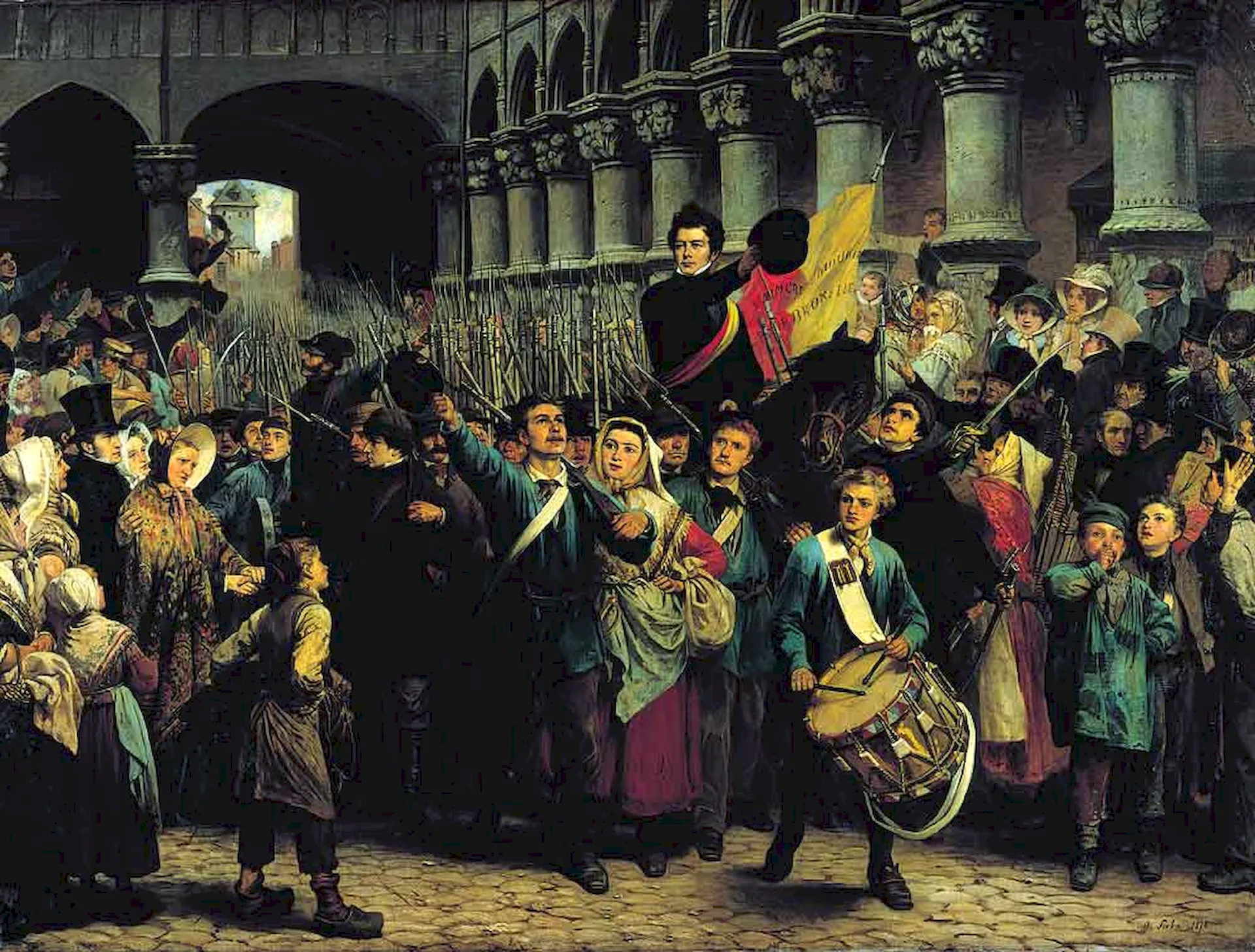
In August 1830, inspired by the July Revolution in Paris, Brussels rose against Dutch rule. By October, a provisional government had declared Belgian independence. The Belgian Revolution unfolded while Louis was in Antwerp; the province of Limburg was divided between Belgium and the Netherlands, and Antwerp became a city of the new Belgian state.
Louis Brüls chose Belgian citizenship and remained Belgian for the rest of his life.
Following the revolution, Louis moved back closer to his family's region, spending time in Maastricht and Liège between approximately 1830 and 1835, working as an independent artist.
In 1832, during this Maastricht–Liège period, and probably during one or more return visits to his parental home at Drinhausen, Louis executed a family-portrait cycle depicting members of the Brüls household, including his father Peter Josef Brüls and his mother Maria Christina Pelzer.
He also painted his elder brother Joseph Ignatius Brüls and his sister-in-law Catharina Vincent (1801–1885), likely during work in Maastricht or visits to Drinhausen; the surviving images suggest these portraits were produced at roughly the same time.
In 1833, Louis's father Peter Josef Brüls died at the age of seventy-five at Drinhausen. He was survived by his wife Maria Christina Pelzer and several children.
Munich and the Nazarene World

By 1834, Louis Brüls already had a foothold in Munich: he appears in the membership list of the Kunst-Verein (Art Society). In 1835, at the age of thirty-two, he moved to Munich, then the centre of a major German artistic revival under King Ludwig I. The phrase "Athens on the Isar" captured Munich's transformation under the king's patronage into a city modelled on classical ideals, with monumental architecture, public art, and state-supported artistic production.
The journey from the Maastricht–Liège region to Munich would have been a substantial overland carriage journey of approximately 660–680 km, likely taking seven to nine days via the established posting routes across the Rhineland and southern Germany. Ludwig I had invited leading Nazarene painters, including Peter von Cornelius, to lead Munich's transformation into a monumental art city through vast fresco cycles and church commissions.
The Nazarene aesthetic that dominated Munich in these years, with its linear precision, medieval and early Renaissance sources, devotional religious content, and moral clarity of narrative, would leave a visible mark on Louis's subsequent work, though no source documents his specific studies or training in the city.
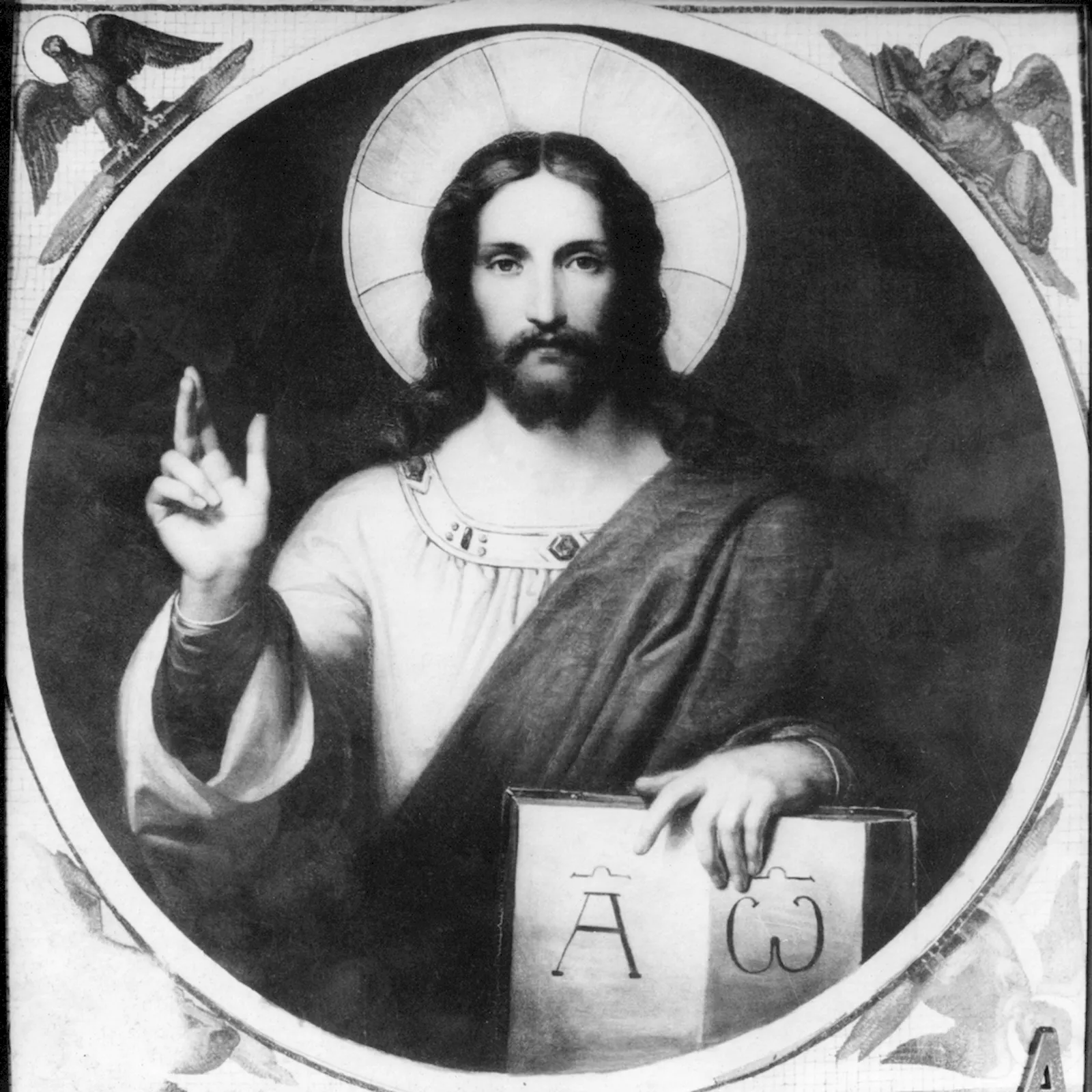
A devotional painting of Christ in blessing, known in German records as Der Segensspruch and catalogued in French as Le Sauveur bénissant (Christ Blessing), was acquired by or for King Ludwig I of Bavaria and entered the collection of the Neue Pinakothek in Munich.

The catalogue entry placed Louis on the same page and within the same artistic grouping as Wilhelm von Schadow, Friedrich Overbeck, Johann von Schraudolph, and Josef Anton Fischer, the core Nazarene figures patronised by Ludwig I. His work hung alongside theirs in the king's purpose-built gallery of contemporary art. The Neue Pinakothek had been founded by Ludwig I specifically to house the modern art he championed; the cornerstone was laid in 1846 and the gallery opened in 1853. Louis's painting was among those constituting the founding collection.
First Visit to Italy
By 1836, Louis Brüls was working in Rome. His painting Femmes italiennes en conversation à la fontaine bears the inscription "L. BRULS / ROMA 1836," providing direct evidence of his presence. The subject matter reveals a turn toward contemporary Italian scenes, local dress, and observed settings. Together, the inscription and subject confirm that he was already working in Rome and signing paintings from there. That same year brought loss at home. Around 13 June 1836, his mother, Maria Christina Pelzer, died in Drinhausen.

If 1836 marks his arrival in Roman artistic life, 1837 shows him carrying that first Italian phase back across Europe. Antoine Wiertz painted a small portrait of Louis in Italy in 1837, inscribed on the reverse as the portrait of "my dear painter Bruls" and noted as painted by Wiertz in Rome.
The tone was personal and affectionate, and the sketch reveals that Louis was part of a circle of Belgian and European artists working abroad. The portrait, an oil on cardboard measuring 240 × 140 mm, was acquired by the Royal Museums of Fine Arts of Belgium in 2023.
On 1 May 1837, the Innsbrucker Zeitung recorded the arrival at Innsbruck of "Die Hrn. Wierx und Bruls, Mahler, von Venedig": Messrs Wierx and Brüls, painters, from Venice. The companion named "Wierx" is almost certainly Antoine Wiertz, his fellow artist from the Antwerp Academy; the spelling likely reflects the German rendering of the Flemish surname in Fraktur script.
Louis was travelling north through the Tyrol. He was not heading into Italy in 1837; he was returning from it. Combined with the painting in Rome by Wiertz, the Innsbruck notice establishes that he had already spent a substantial period working in Italy before travelling north through Venice and over the Brenner Pass.
The Salon d'Anvers, 1837
By the summer of 1837, Louis was exhibiting the results of his Italian work publicly. The Salon d'Anvers opened on 1 August with five of his works on display, all Italian in subject. The titles themselves showed how thoroughly Italy had entered his imagination and repertoire: Women from Nettuno, A Fortune-Teller, Italian Women Speaking by a Fountain, A Procession at Cerbara, Brigands of the Abruzzi.

His direct experience of Rome was now reflected in exhibited work. The painting Femmes Italiennes en conversation, près d'une fontaine was almost certainly the same work signed in Rome in 1836. The exhibition drew a strongly positive review in the Revue de Bruxelles, which described his work as showing a master's talent, with rich composition, graceful drawing, and vigorous colour, a considerable transformation from the mediocre copies he had shown at Liège only seven years earlier.
The catalogue gave his address as chez M. VanMarcke, place verte, à Liège. The address is best understood as a practical correspondence address, rather than proof of a settled Liège studio. It showed that Louis was already living in two spheres at once: artistically formed by Italy, yet still professionally connected to Belgium.
By 1837, he was no longer hesitating between two lives. He was the painter from Rome, and he was also the exhibitor from Liège. Looking back, the period between 1835 and 1837 marked a decisive shift in Louis Brüls's career, from a regional artist working between Liège and Munich to a painter of Italian subjects with a growing European reputation.